
Morpeth Bypass - Northumberland, UK
GRAF Group Reference: 620 m³ EcoBloc Flex attenuation for a 13-mile bypass, replacing eight deep GRP tanks with one shallower system discharging at 10 L/s.
Morpeth, Northumberland, United Kingdom
GRAF Group Reference. International project reference from GRAF Group. Not an Australian installation. View original source.
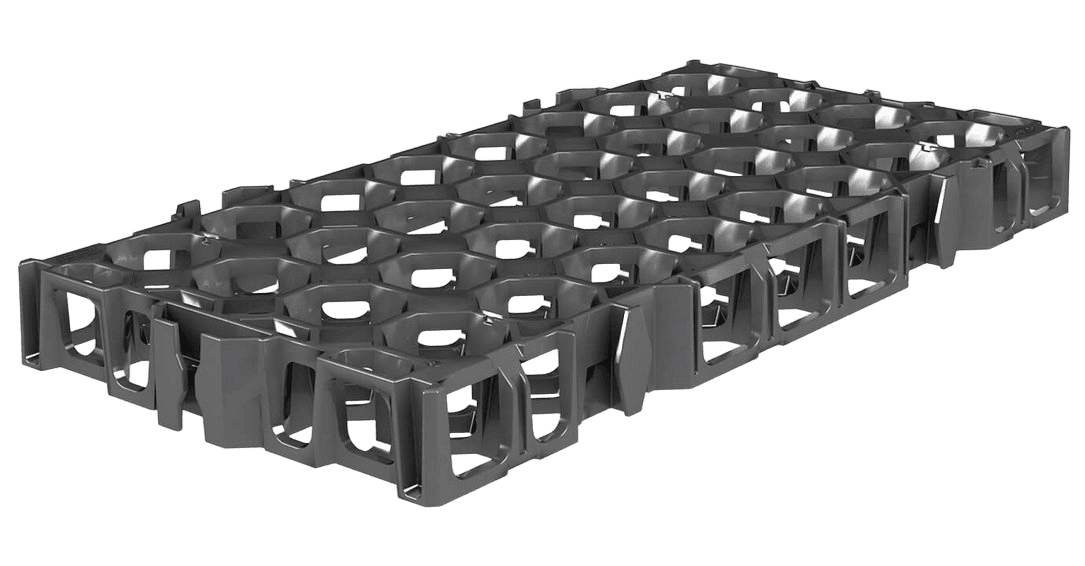
Catalogue product and system imagery only. Not project site photos from this location.
620 m³
Attenuation volume
1 vs 8
Tanks vs GRP scheme
~6 m
Shallower placement
Project data
- Location
- Morpeth, Northumberland, United Kingdom
- Region
- Europe
- Sector
- Transport
- Solution
- Stormwater detention/retention
- Product
- EcoBloc Flex
- Source
- GRAF Group Reference
- Purpose
- Highway stormwater attenuation
- Volume
- 620 m³
- Alternative
- One tank vs eight deep GRP tanks
- Discharge
- 10 L/s via vortex flow controller
- Road
- 13-mile Morpeth bypass
- Site offices
- 2 × Klaro E WWTP during construction (published)
Challenge
Contractors on a new 13-mile Morpeth bypass needed controlled drainage without deep excavation. An early concept used large 4 m diameter GRP tanks up to nine metres underground, four either side of the road, with a long drop into collection manholes.
Solution
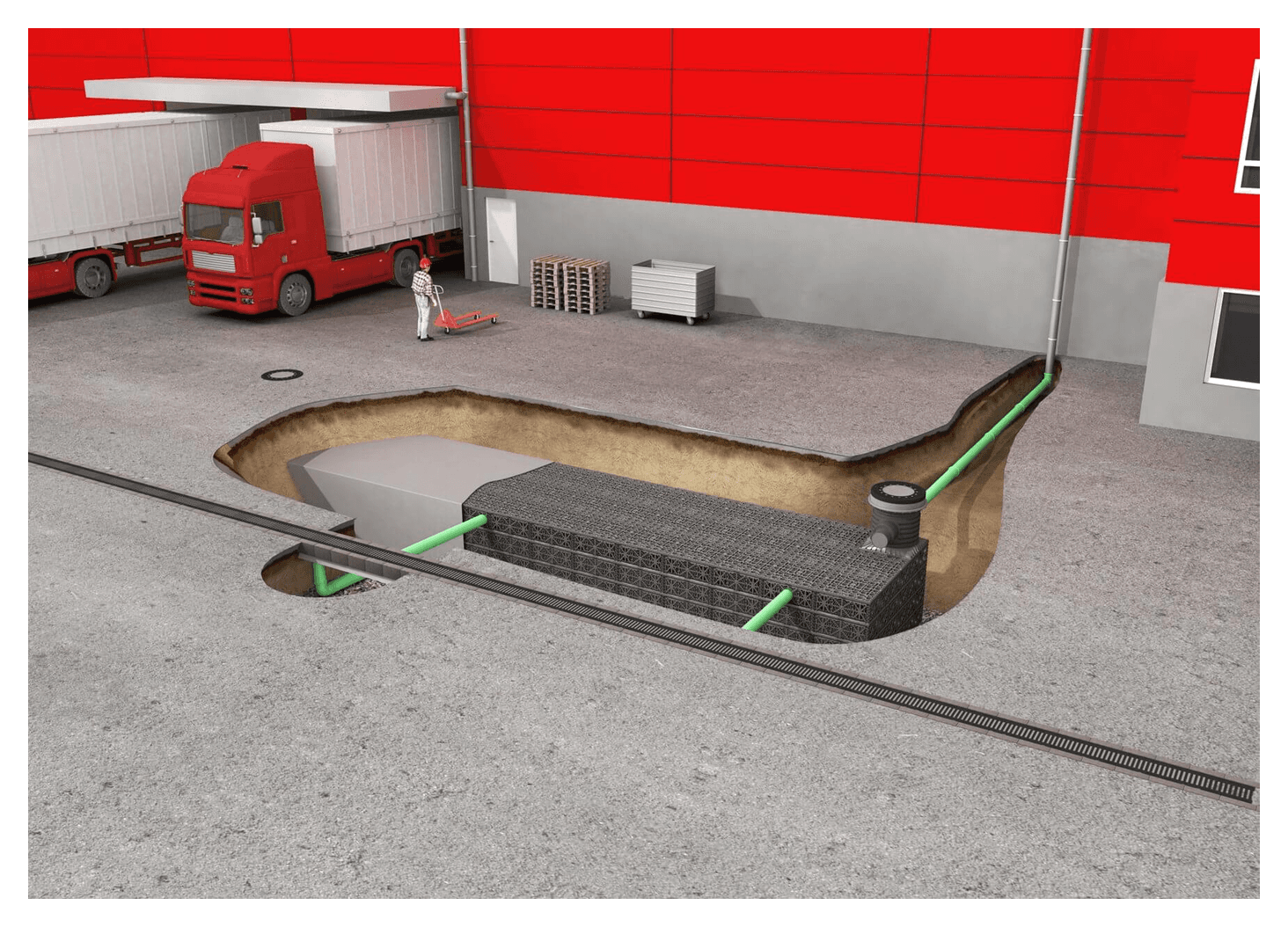
GRAF UK supplied and installed a 620 m³ EcoBloc Flex system as a single tank placed nearly six metres higher than the GRP scheme, cutting excavation. Road gullies feed the tank; a vortex flow controller discharges to a culvert at 10 L/s for Northumberland County Council. Two Klaro E plants served site offices during the two-year build.
Outcomes
- 620 m³ EcoBloc Flex replaced eight deep GRP tanks
- Tank raised nearly six metres versus original concept
- 10 L/s controlled discharge to culvert
How the system works
Manufacturer system diagram showing how this product family works. Not a site drawing for this project.
Related product photography
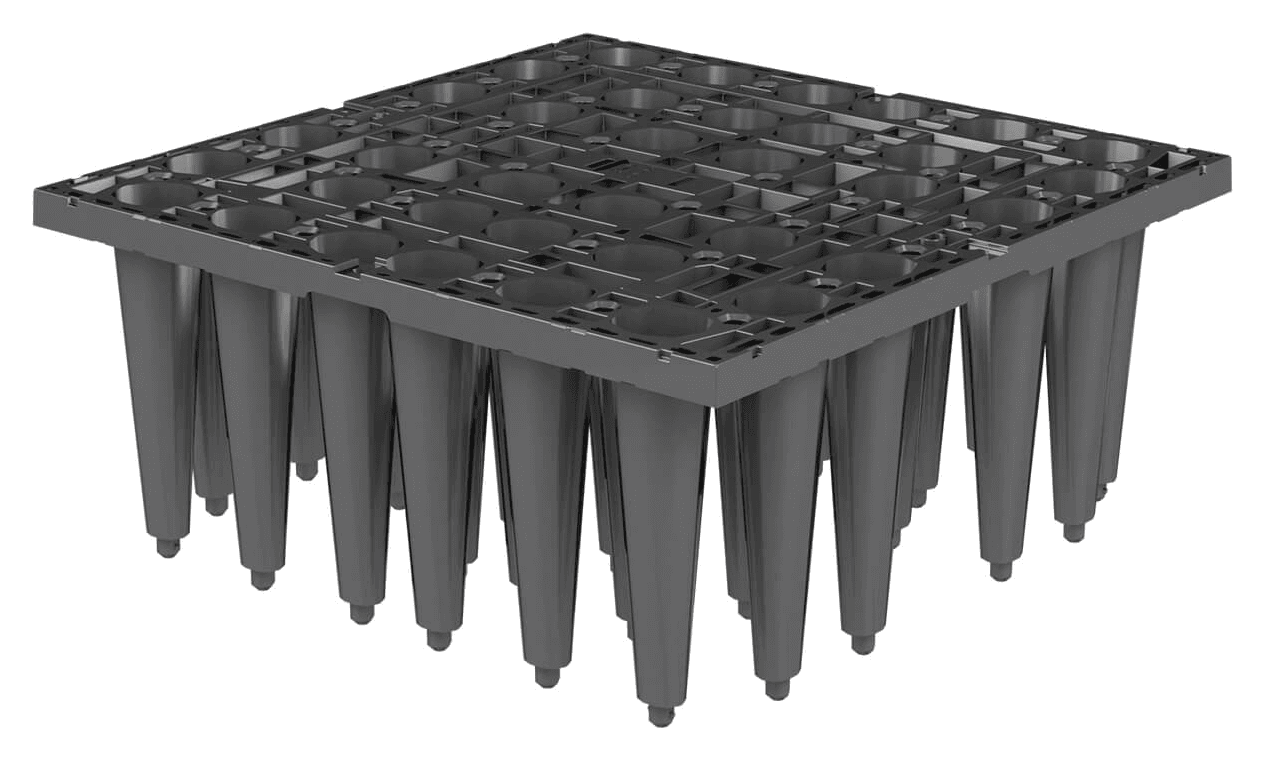
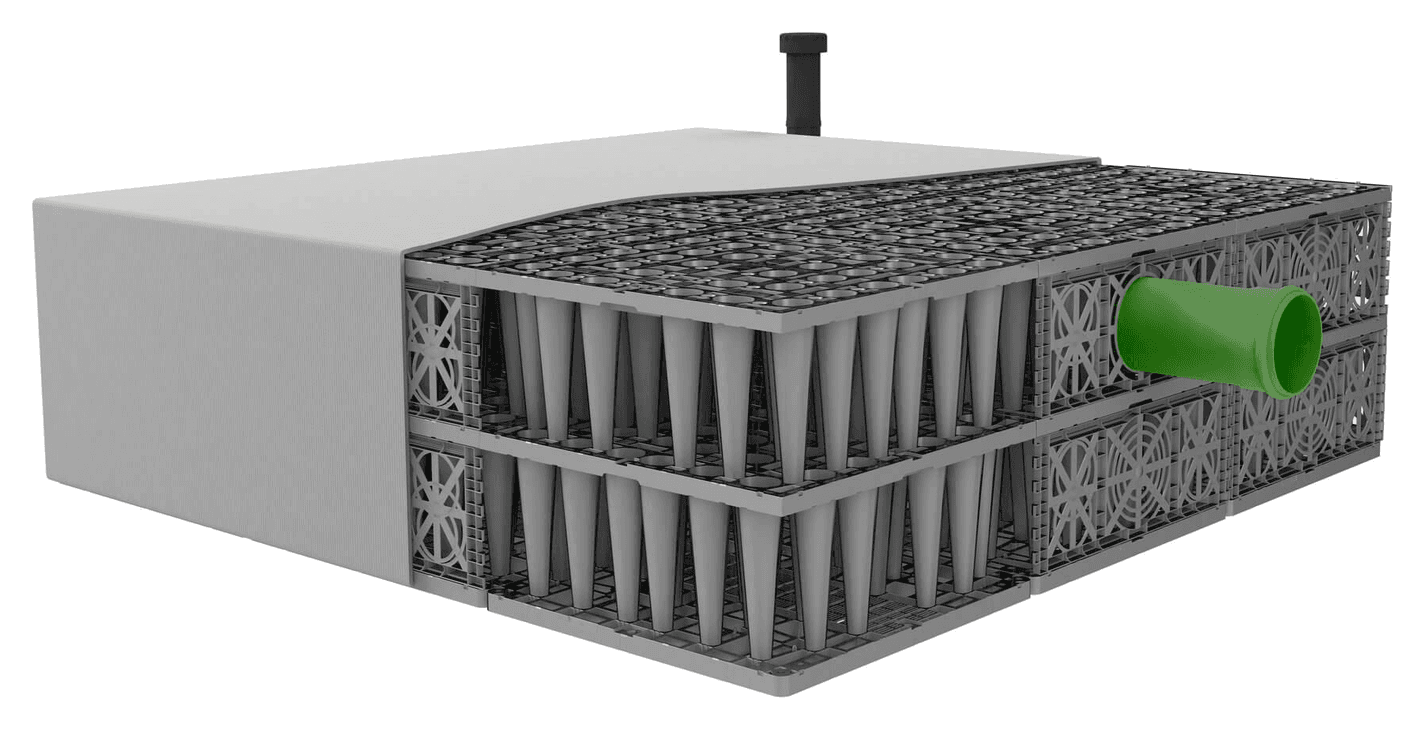
Catalogue product and system imagery only. Not project site photos from this location.
Planning something similar?
Morpeth Bypass - Northumberland, UK