
GRAF Australia
GRAF | REUSE guide
Commercial rainwater reuse in Australia
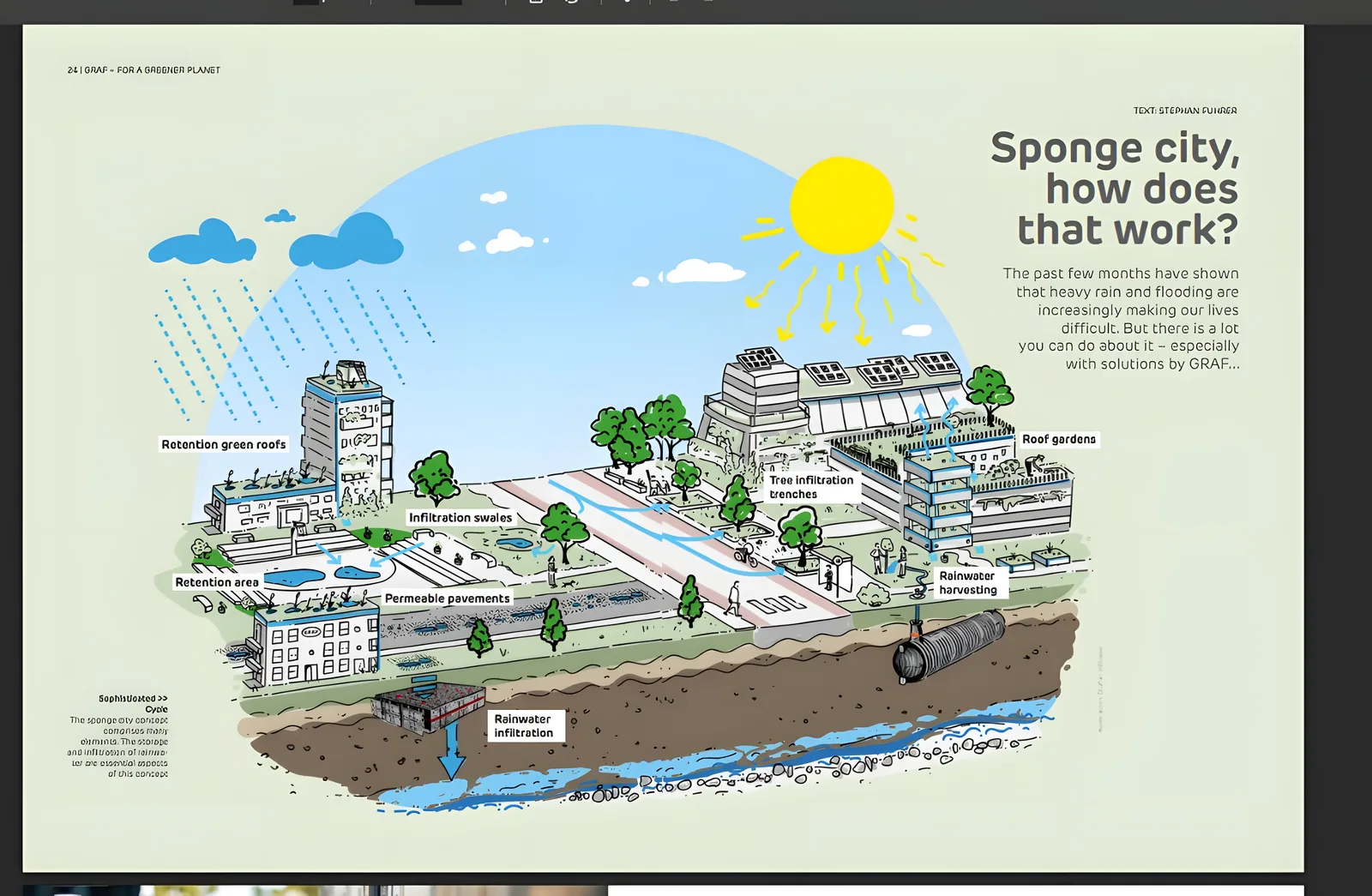
Connect catchment, filtration, GRAF storage and pumping into one non-potable reuse train.
In short
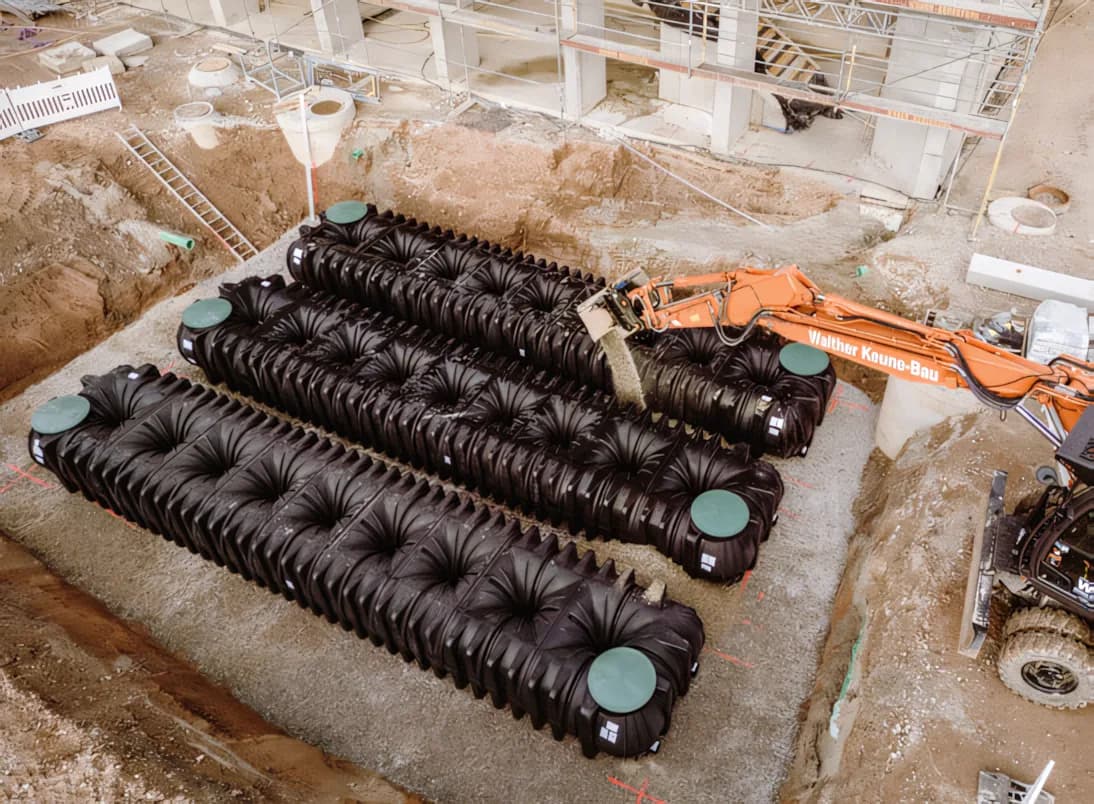
Commercial rainwater reuse collects roof water, filters and stores it, then pumps it to approved non-potable uses. GRAF | REUSE Commercial Rainwater System connects GRAF storage with pumping and controls around the site demand. GRAF | LIFT, PRESS, REUSE and CARE are being rolled out Australia-wide excluding Victoria. Project delivery, commissioning and field attendance are confirmed against location and scope.
How it works
What to do next
- 01
Define catchment and demand
Roof area, rainfall assumptions and the non-potable uses to be served.
- 02
Select storage and filtration
GRAF underground or project storage with inlet filtration matched to the site.
- 03
Add PRESS delivery and controls
Transfer or booster package sized to required flow and pressure.
Typical commercial reuse applications
Toilet flushing, irrigation, washdown and other approved non-potable uses are common. Potable use is not assumed and must follow applicable project and authority requirements.
Where treated effluent or other suitable treated water is the source instead of rainwater, use the treated-water reuse guide and package path.
What GRAF needs to size the system
Catchment, rainfall basis, reuse demand, required flow and pressure, storage volume, treatment needs if any, power supply, control requirements and drawings.
Existing GRAF rainwater products can form part of the REUSE train. The commercial package coordinates pumping and controls around that storage.
Compare options
Keep reuse storage and OSD detention as different design jobs unless the package is combined.
| Objective | System focus | GRAF path |
|---|---|---|
| Non-potable supply | Catchment + store + pump | GRAF | REUSE rainwater |
| Peak flow control | Detention / OSD volume | Stormwater detention products |
| Both on one site | Split or combined volume | Detention + Reuse package |
| Treated source water | Quality + polish + pump | GRAF | REUSE treated water |
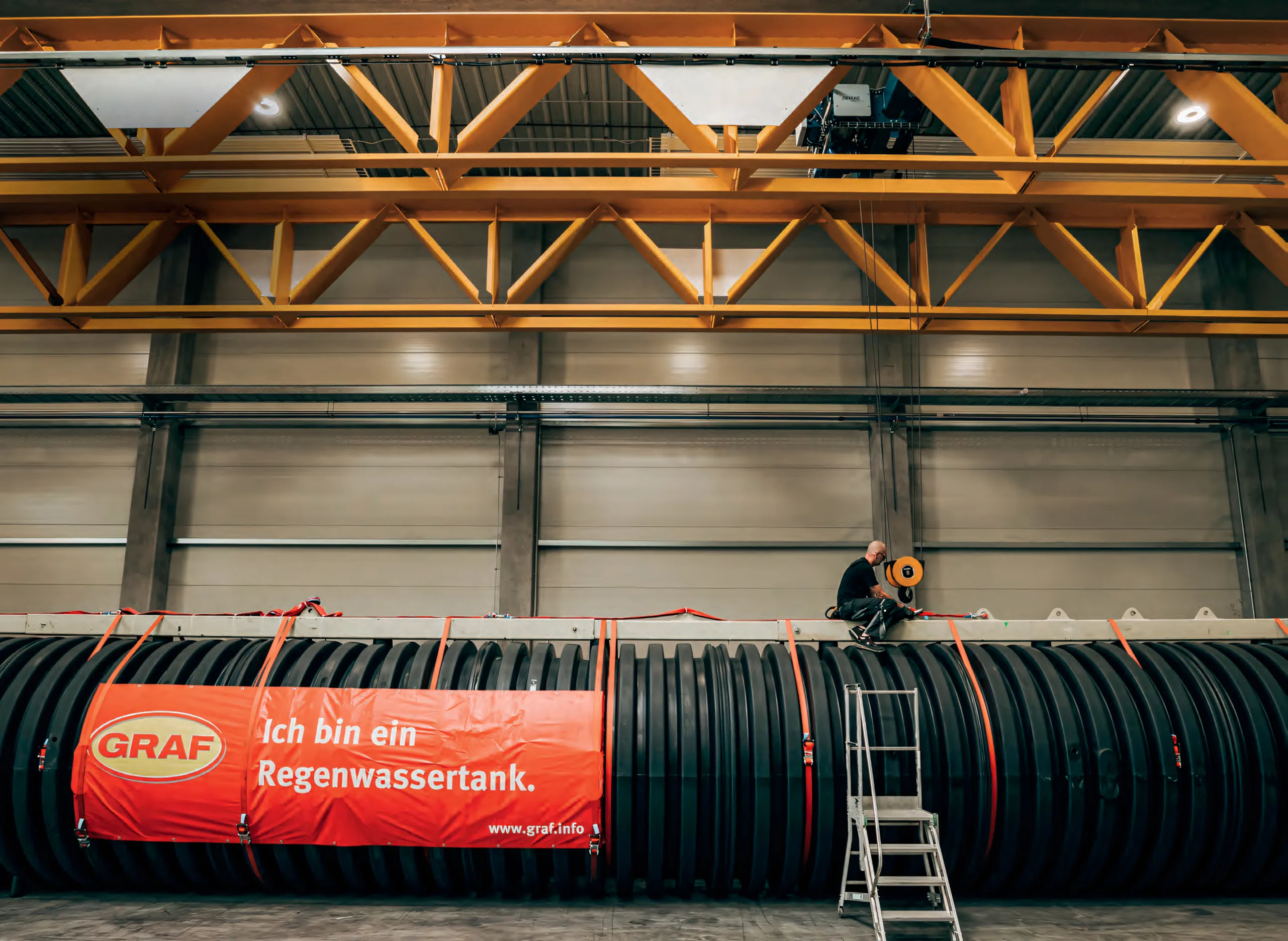
From Australian projects
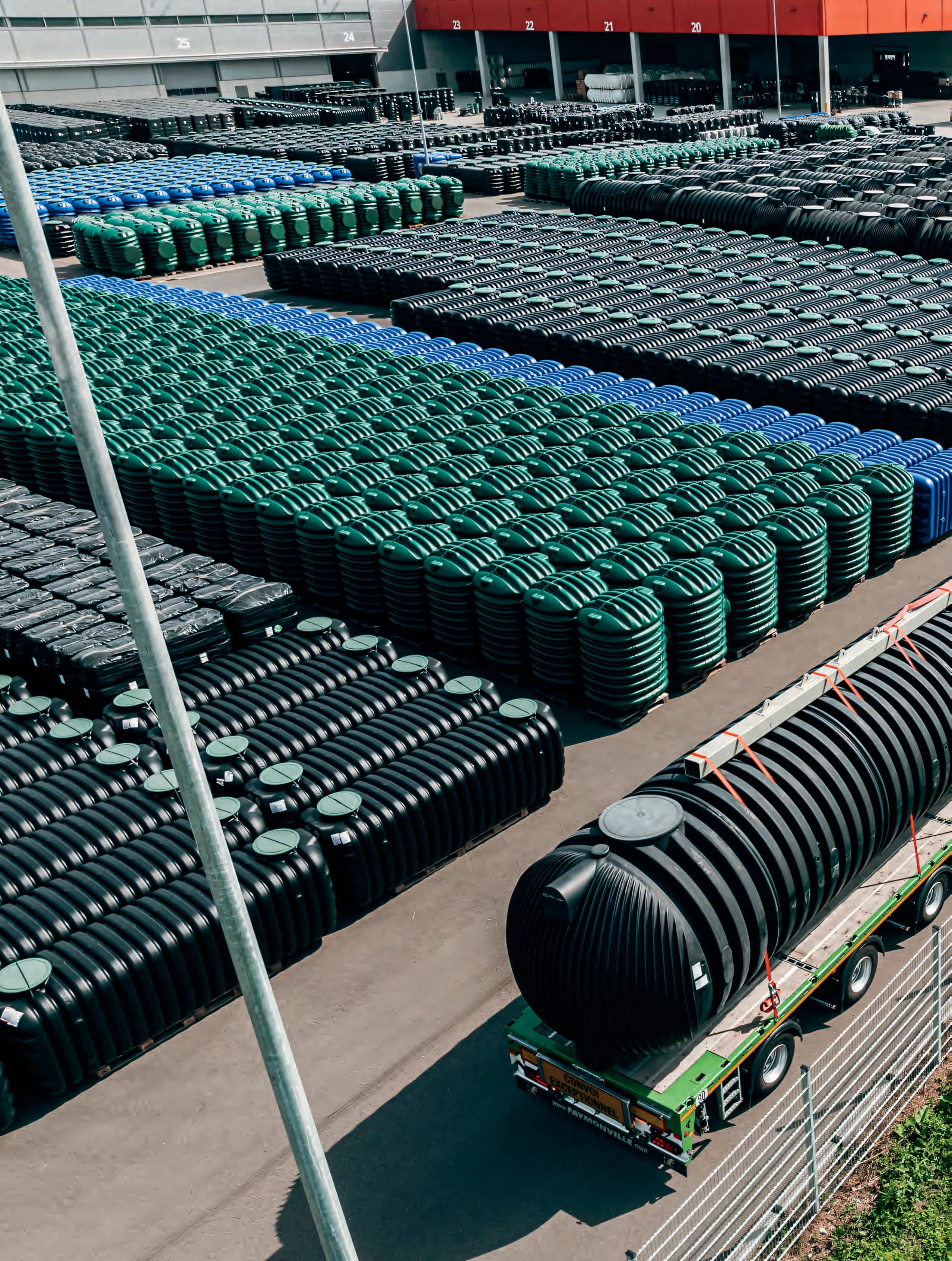
Specify these products
Frequently asked questions
What is commercial rainwater reuse?+
What does a GRAF | REUSE rainwater system include?+
Is commercial rainwater reuse available in Victoria via GRAF | REUSE?+
What information is needed to size a reuse system?+
How does reuse differ from OSD detention?+
Keep reading
Related reading
Guide
Treated water reuse
Storage, polishing and delivery for suitable treated water.
OpenGuide
Rainwater reuse and detention
Combined reuse storage and stormwater detention.
OpenGuide
Underground rainwater tanks
Carat and Platin burial systems, sizing, filters and pumps.
Open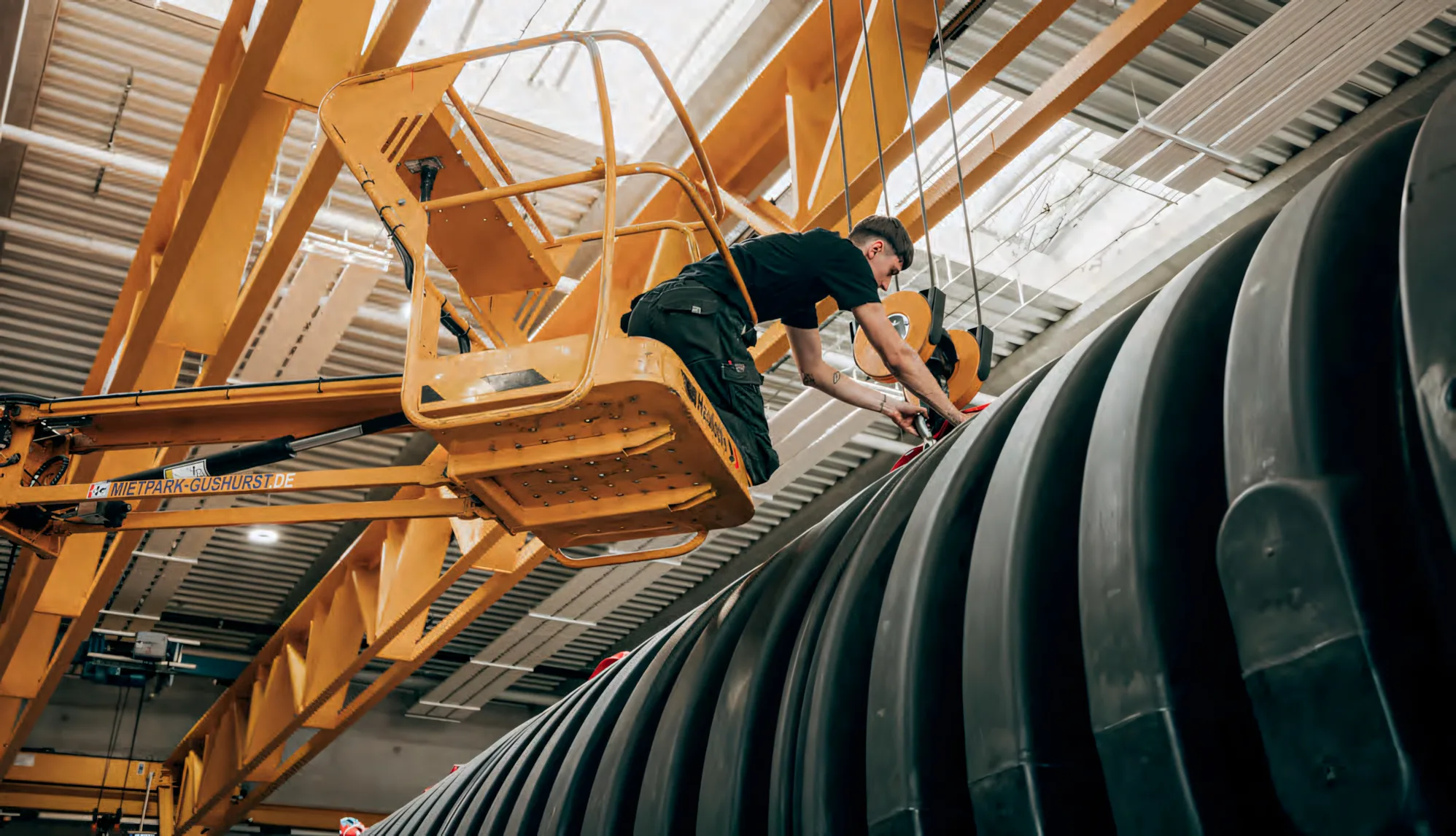
Guide
Commercial pressure booster systems
GRAF | PRESS duplex and multi-pump booster packages.
Open
Need a commercial rainwater reuse quote?
Send catchment, demand and pressure notes. Call 1300 131 971 or use the quote form.