
GRAF Australia
Blog · 2026-09-14
EcoBloc vs concrete: choosing an OSD / detention system in Australia
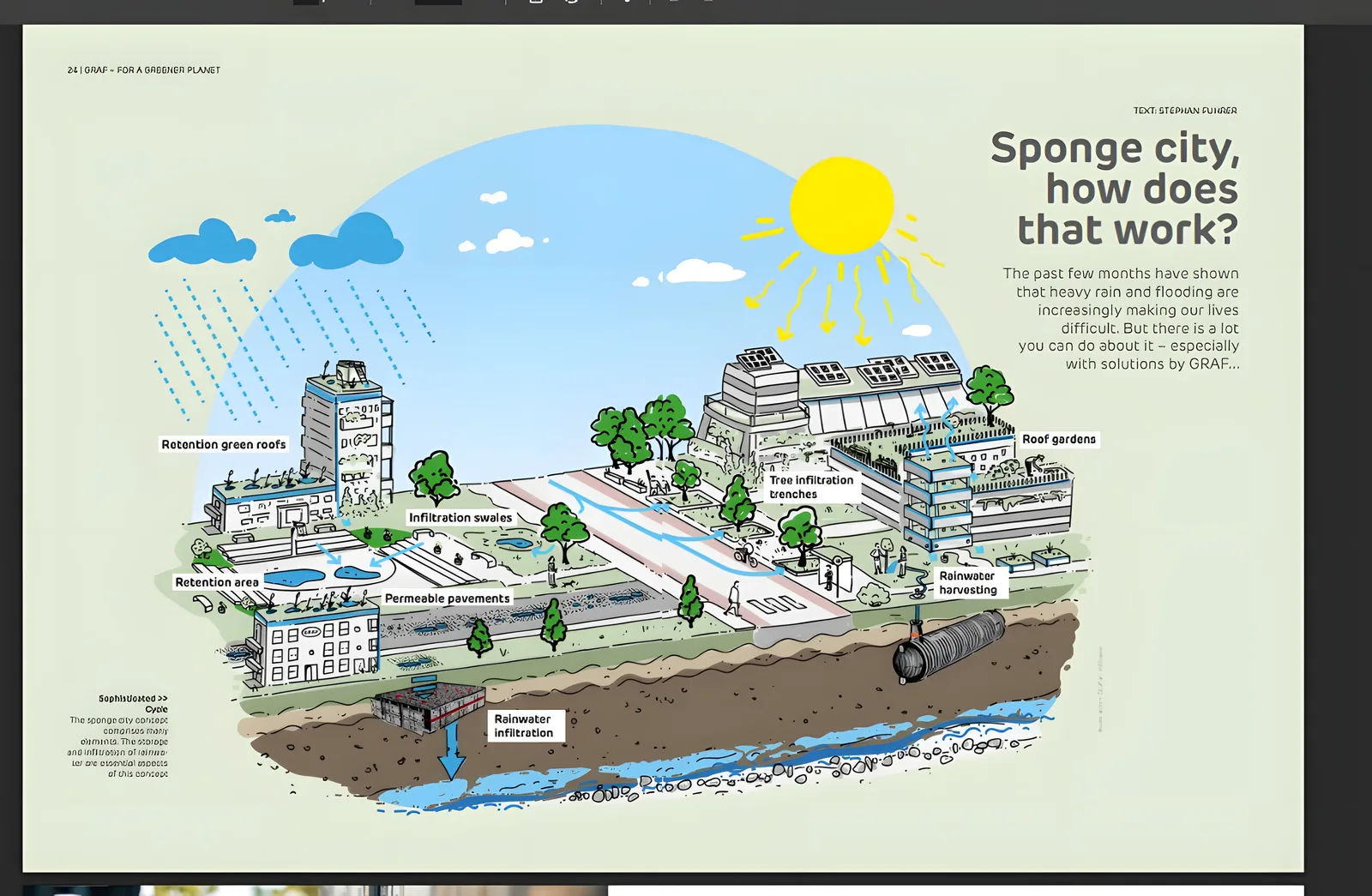
An OSD tank holds stormwater on site and releases it at a controlled rate so developments meet council peak-flow limits. EcoBloc builds that volume with lightweight modular crates. Concrete tanks are monolithic vessels. The right answer depends on footprint, cover depth, inspectability and programme, not a single best product.
What an OSD / detention system does
On-site detention temporarily stores runoff from roofs and hardstand, then discharges slowly to the street or waterway. It is not a rainwater reuse tank. Confirm whether the consent says OSD, detention, attenuation, retention or harvesting before you specify.
EcoBloc modular crates (GRAF facts)
EcoBloc Inspect Smart is GRAF's standard modular stormwater cell: 800 × 800 × 330 mm, 211 L gross (~96% void), 10 kg, 100% GRAF Upcyclen recycled plastic. Built-in inspection channel and high-pressure flushable path. Truck-passable SLW 60 / 60 t (B-double) from 800 mm cover; cover under traffic typically 800-2000 mm; max cover 2750 mm without groundwater / traffic (per catalogue notes).
Concrete OSD tanks (decision frame only)
Concrete tanks suit briefs that demand a monolithic vessel or an existing civil preference for concrete. They are heavier to deliver and place, and access / maintenance design still needs an O&M plan. We do not invent competitor capacities or load classes here.
Decision criteria for Australian sites
Compare: required detention volume, available footprint under pavement, cover depth, traffic class, groundwater, inspectability, construction programme and authority acceptance. EcoBloc wins when you need flexible footprint and inspectable modular volume under car parks. Concrete may win when the civil spec hard-locks a tank vessel.
EcoBloc vs Carat / Platin detention tanks
GRAF also supplies Carat and Platin stormwater detention tanks for vessel-style OSD briefs (Carat detention catalogue sizes include 2,700 / 3,750 / 4,800 / 6,500 L). Hybrid sites sometimes mix crates and tanks. GRAF Australia can compare against the civil volume.
Sizing and quote path
Your engineer sizes volume from catchment, rainfall and permitted discharge against the local OSD policy. Use GRAF Australia OSD / stormwater design tools for a first pass, then send plans and location to grafaustralia.com.au or 1300 131 971.
Comparison
EcoBloc vs concrete vs GRAF detention tanks (criteria + GRAF facts)
| EcoBloc Inspect Smart | Concrete OSD tank | Carat / Platin detention (GRAF) | |
|---|---|---|---|
| Form factor | Modular crates (stack / array) | Monolithic vessel | Poly vessel (half-shell Carat / low-profile Platin) |
| Volume build | 211 L per module (~96% void); array to brief | Project-cast or precast capacity | Discrete tank sizes (e.g. Carat detention 2.7-6.5 kL) |
| Weight / logistics | ~10 kg per module; stackable shipping | Heavy plant and cranage typical | Lightweight poly vs concrete |
| Inspectability | Built-in inspection channel; flushable | Depends on access design | Manhole / dome access on tank |
| Traffic | SLW 60 / 60 t from 800 mm cover (catalogue) | Spec-dependent | Vehicle lids when specified |
| Best when | Large footprint under pavement; modular + O&M access | Civil spec demands concrete | Vessel geometry preferred |
| Watch-outs | Cover, geotextile/liner, O&M plan | Programme, weight, access | Cover depth and load class |
FAQ
What is an OSD tank?+
EcoBloc vs concrete OSD: which should I use?+
Is EcoBloc inspectable after installation?+
EcoBloc vs Carat detention tank: when to choose which?+
How do I size an OSD system for a commercial site?+
Where do I buy OSD / detention systems in Australia?+
Keep reading
Related reading
Guide
Stormwater detention Australia
OSD tank meaning, EcoBloc vs tanks, and council-ready FAQs.
OpenBlog
OSD tank Australia (blog)
OSD tank meaning for Australian sites: on-site detention vs rainwater reuse, stormwater detenti…
Open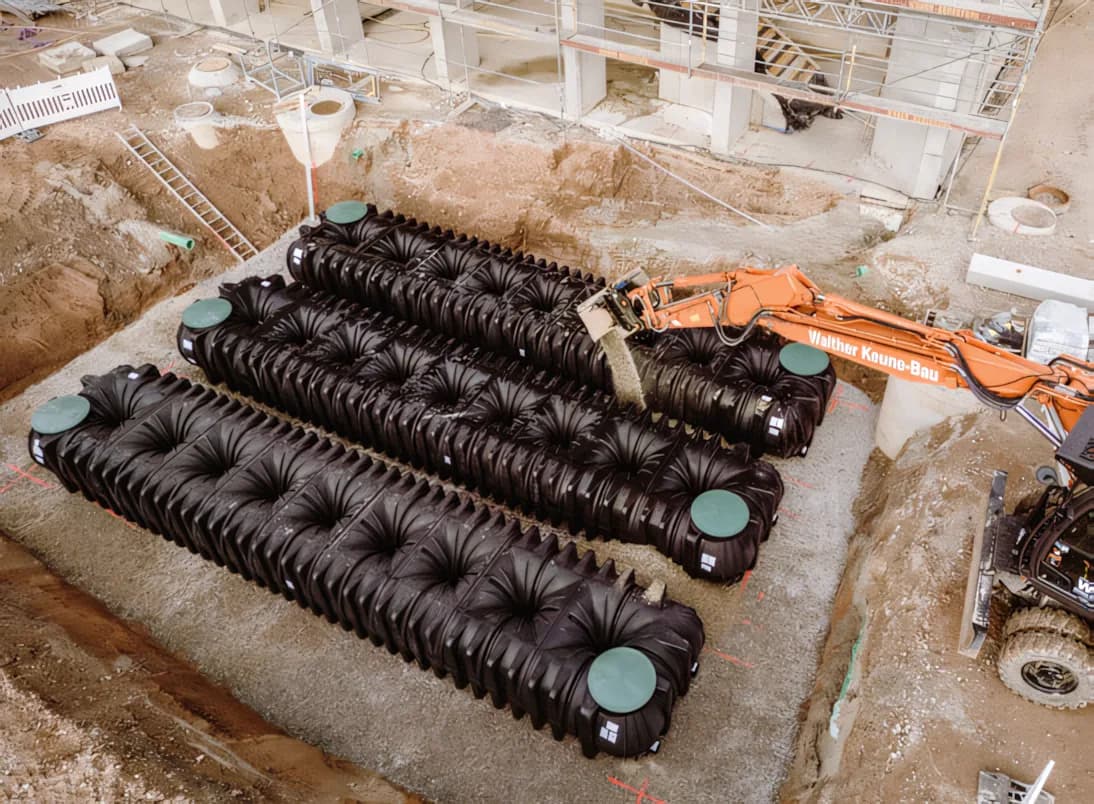
Guide
Underground rainwater tanks (reuse, not OSD)
Carat and Platin burial systems, sizing, filters and pumps.
Open
Blog
Sewage and sewer pump station tanks
Choose a GRAF / GARANTIA sewage or sewer pump station tank body in Australia: Sapphire and Supe…
Open
Need a GRAF Australia quote?
Call 1300 131 971 or send site details for sizing and supply.