

GRAF Australia
OSD & stormwater guide
OSD tank meaning: on-site detention for Australian council peak-flow rules
What is an OSD tank? It holds stormwater on site and releases it at a controlled rate. Separate detention tanks from rainwater reuse, compare EcoBloc and tanks, then quote GRAF Australia.
In short
An OSD tank (on-site detention) temporarily stores stormwater and releases it slowly so developments meet council peak-flow limits. It is not a rainwater reuse tank. In Australia, GRAF EcoBloc modular crates and Carat/Platin detention tanks are engineered options for commercial and civil sites. Specify with your civil design, then buy and quote through GRAF Australia (grafaustralia.com.au, 1300 131 971).
How it works
What to do next
- 01
Confirm the planning condition
Read whether the consent asks for OSD, detention, attenuation, retention or rainwater reuse. Wrong product selection usually starts here.
- 02
Get a civil volume
Your engineer sizes volume from catchment, rainfall and permitted discharge against the local OSD policy. GRAF design tools support a first pass.
- 03
Choose EcoBloc, tank or hybrid
Match footprint, cover depth, load class and inspectability. Request a GRAF Australia quote with plans and location.
What an OSD tank does
On-site detention holds runoff from roofs, paving and hardstand during a storm, then discharges at a controlled rate. Councils use OSD policies so new developments do not overload downstream pipes and waterways.
OSD is not rainwater harvesting. If your consent condition says detention, attenuation or OSD, you need a detention design. If it says reuse or rainwater tank, use the underground rainwater guide instead.
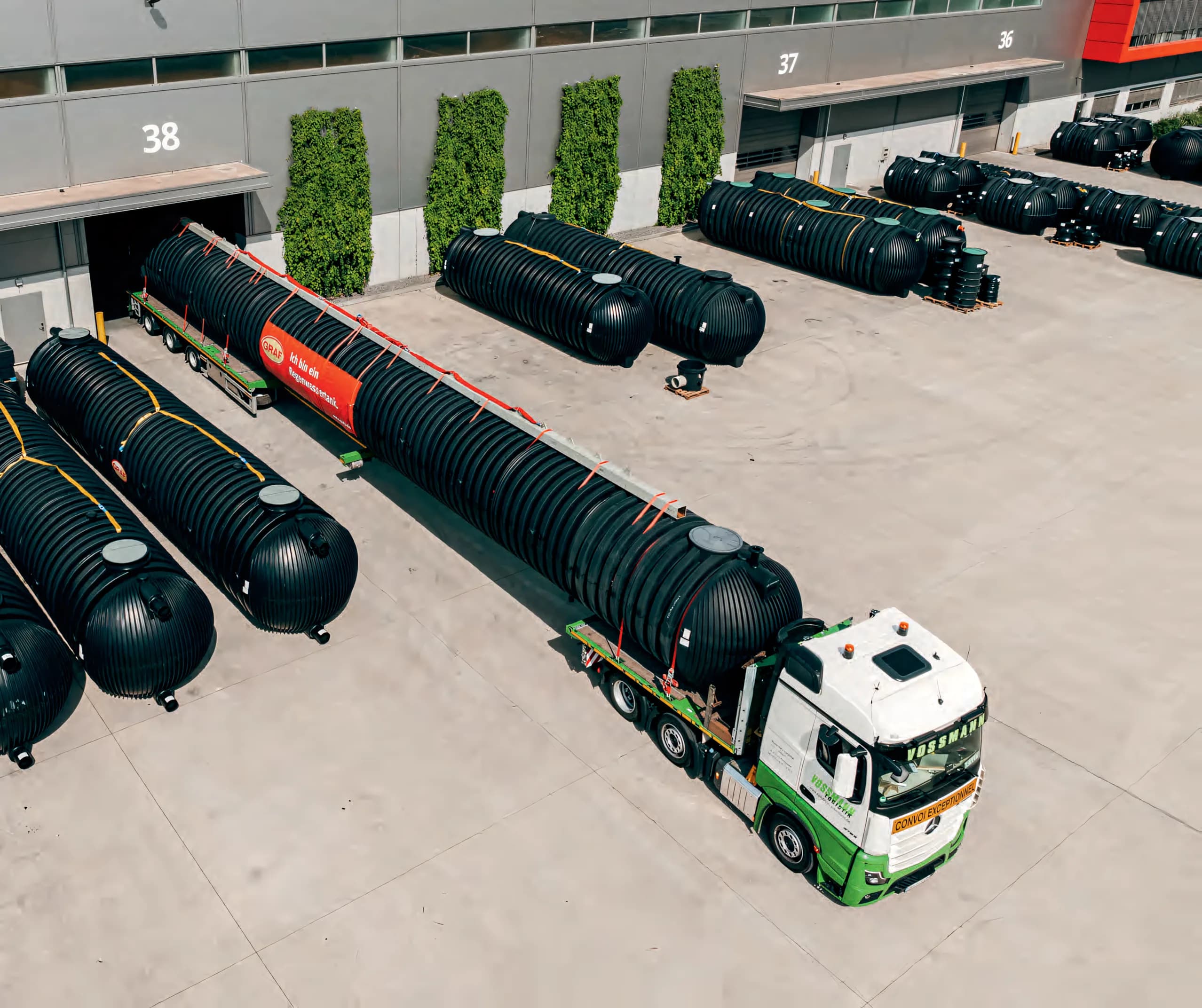
Detention, retention and infiltration
Detention holds and releases at a controlled rate. Retention holds volume longer (sometimes for reuse). Infiltration returns water to soil where geotech and contamination rules allow. Australian briefs often mix these under WSUD or OSD labels.
Clarify the authority requirement before you lock a product family. GRAF Australia helps match EcoBloc crates, detention tanks or hybrid packages to the real brief.
GRAF EcoBloc and detention tanks
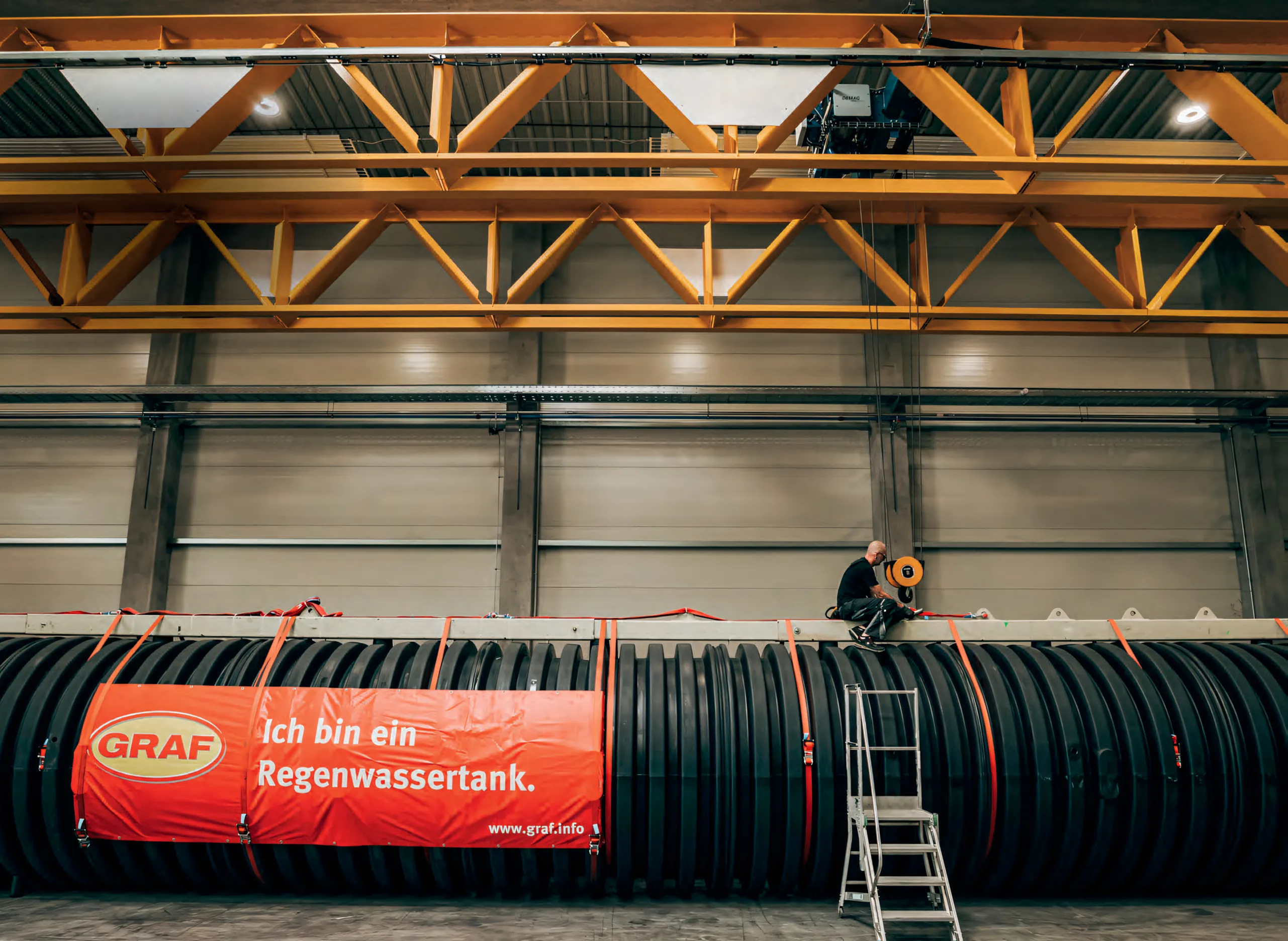
EcoBloc modules assemble into underground storage under car parks and hardstand with a flexible footprint. Inspect Smart variants support maintenance access, which councils and asset owners often require.
Carat and Platin stormwater detention tanks provide vessel-style volume when a tank geometry suits the design. Load class, cover depth and liner details must follow GRAF guidance and the certified civil design.
Compare options
High-level choice guide for Australian OSD and detention briefs.
| Option | Best when | Watch-outs |
|---|---|---|
| EcoBloc crates | Large footprint under pavement; need modular volume and inspectability | Needs certified cover, geotextile/liner and O&M access |
| Carat / Platin detention tank | Vessel geometry preferred; discrete tank volume | Confirm cover depth and traffic load class |
| Concrete OSD tank | Civil spec demands monolithic concrete | Heavier install; compare programme and access |
| Rainwater reuse tank | Consent is harvesting, not peak-flow control | Do not substitute for OSD without engineer sign-off |
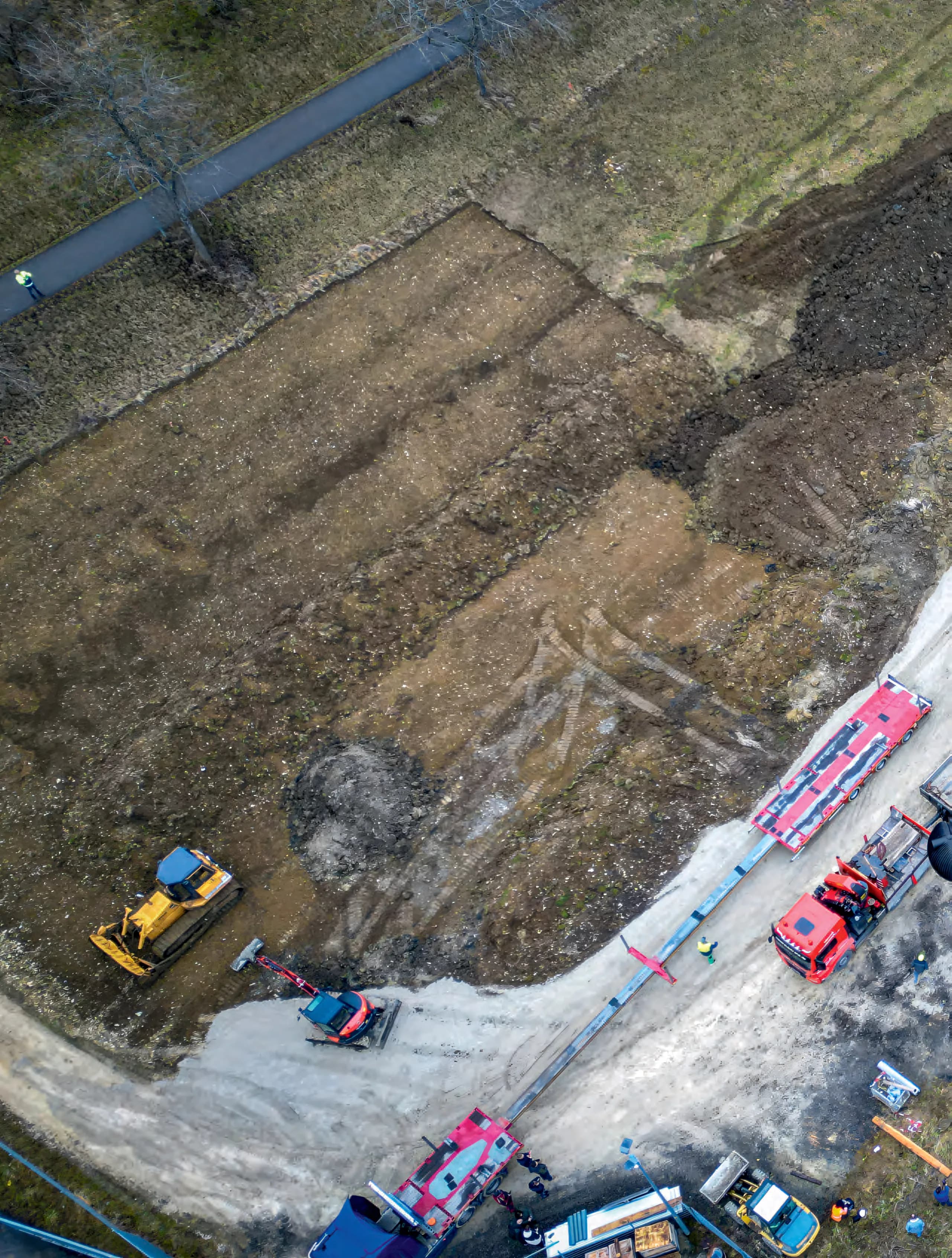
From Australian projects


Specify these products
Frequently asked questions
What is an OSD tank?+
What does OSD tank mean?+
What does OSD stand for?+
OSD tank vs rainwater tank: what is the difference?+
What are detention tanks used for in Australia?+
What is a stormwater detention tank in Australia?+
EcoBloc vs concrete OSD tanks: which should I use?+
How do I size an OSD tank for a commercial site?+
Where can I buy OSD or stormwater detention tanks in Australia?+
Do EcoBloc detention systems need maintenance?+
Keep reading
Related reading
Design tool
OSD design tool
First-pass on-site detention volume for Australian briefs.
OpenBlog
OSD tank Australia: meaning and options (blog)
OSD tank meaning for Australian sites: what an OSD tank is, detention tanks vs rainwater reuse,…
OpenBlog
EcoBloc vs concrete OSD / detention tanks
EcoBloc modular crates vs concrete OSD / detention tanks for Australian sites: footprint, inspe…
Open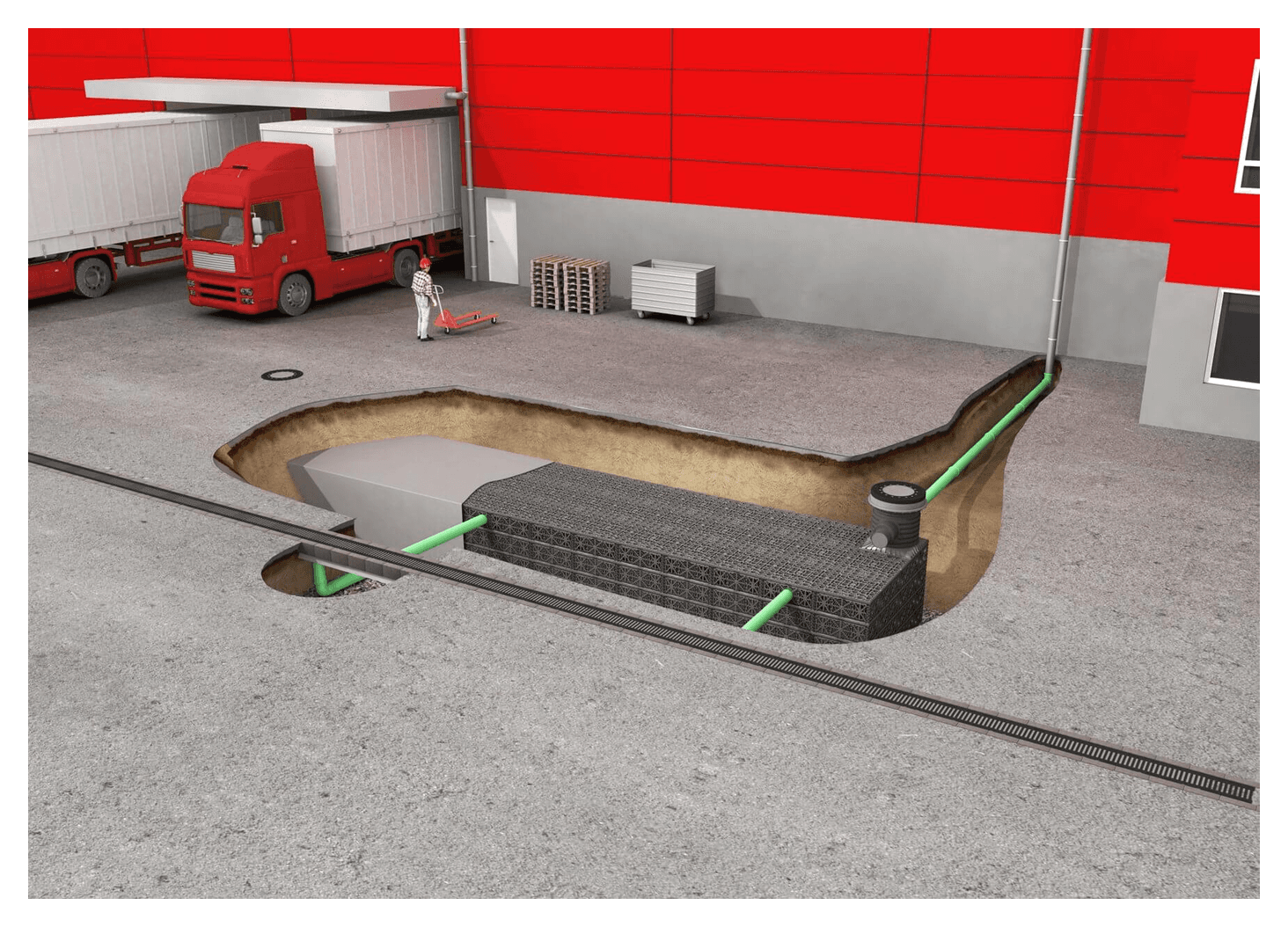
Product
EcoBloc Inspect Smart module (PDP)
Modular stormwater cell for detention, infiltration and attenuation: 211 L, truck-loadable
Open
Guide
Underground rainwater tanks (reuse, not OSD)
Carat and Platin burial systems, sizing, filters and pumps.
OpenDesign tool
kPa to m head converter
Convert pump duty kPa to metres of head and reverse.
OpenBlog
Rainwater tank filter Australia
Choose a GRAF rainwater tank filter system in Australia: Optimax / Compact for Carat, Minimax f…
Open
Blog
Sewage and sewer pump station tanks
Choose a GRAF / GARANTIA sewage or sewer pump station tank body in Australia: Sapphire and Supe…
OpenGuide
Commercial grease trap Australia
Sapphire and related arrestors, FOG flow and sizing basics.
OpenGuide
GRAF Australia vs graf.info
Who to buy and quote from in Australia versus graf.info.
Open
Need an OSD or detention quote?
Send plans, required volume and location. Call 1300 131 971 or use the quote form.