

GRAF Australia
GRAF | LIFT guide
Duty standby pump stations
Plan redundancy, alternation and backup starts when a single pump is not enough for commercial risk.
In short
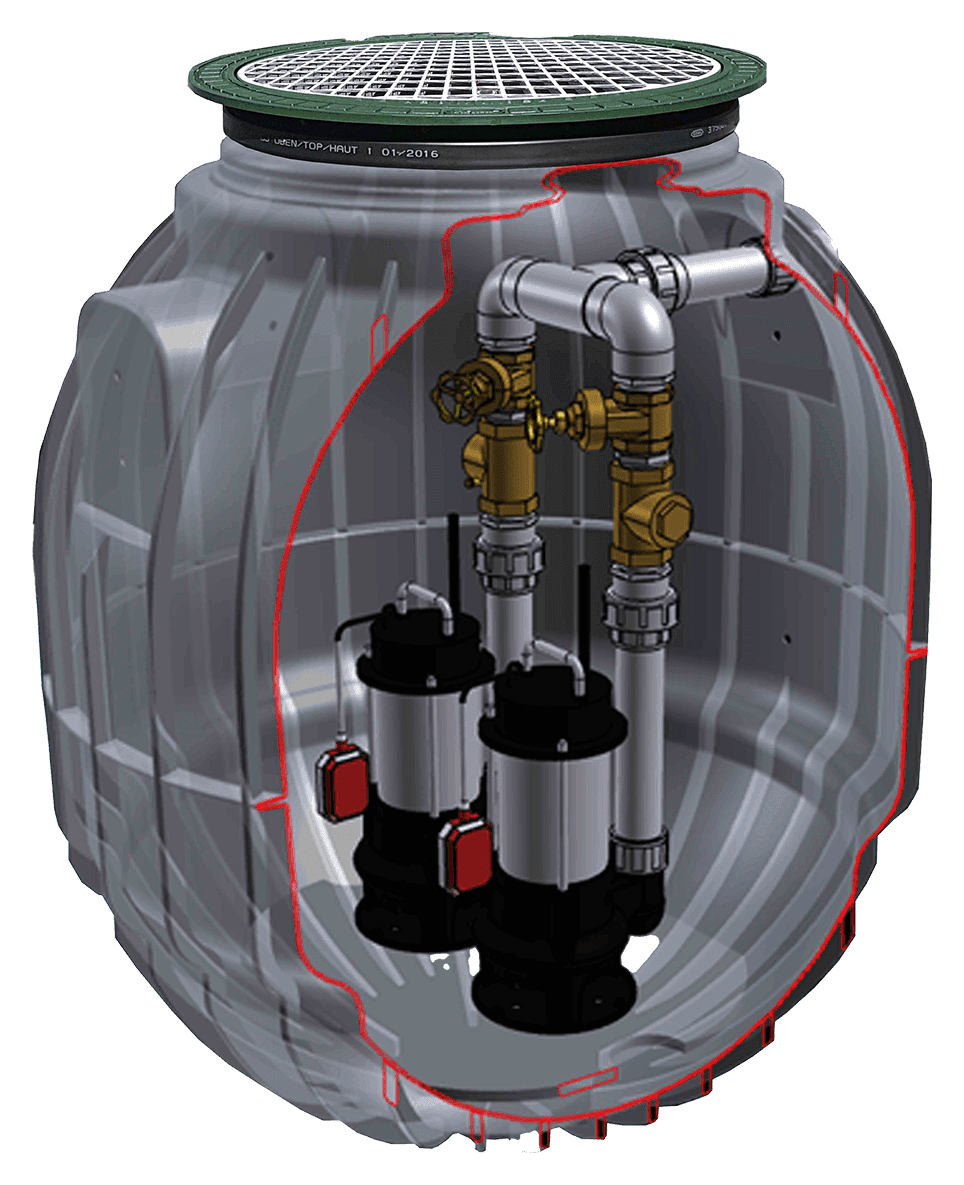
Duty standby pump stations keep a second pump available for backup or alternating operation while sharing a wet well and control panel. GRAF | LIFT packages can include this redundancy when project risk, starts or authority requirements demand it. GRAF | LIFT, PRESS, REUSE and CARE are being rolled out Australia-wide excluding Victoria. Project delivery, commissioning and field attendance are confirmed against location and scope.
How it works
What to do next
- 01
Define continuity risk
Flooding, sewer surcharge, occupancy and authority expectations for backup.
- 02
Confirm hydraulic duty
Flow, TDH and whether assist start is required under peak inflow.
- 03
Specify control logic
Alternation, lag start, alarms and BMS signals with the GRAF | LIFT package.
When redundancy is justified
Commercial buildings, basements with high consequence of flooding, sewer lift stations with limited storage, and sites with long response times often specify duty/standby rather than a single pump.
Redundancy does not replace correct storage and TDH. It reduces the impact of a pump fault or maintenance outage.
Control philosophy to confirm early
Decide whether pumps alternate on each cycle, whether the standby unit only starts on fault, and whether high-level conditions call for assist operation.
Include alarm destinations, run-hour expectations and any BMS or telemetry requirements so the panel scope matches site operations from day one.

Compare options
Match pump count and logic to risk, not habit.
| Arrangement | Typical use | Notes |
|---|---|---|
| Single pump | Low consequence / temporary | No onboard backup |
| Duty / standby | Most commercial stations | Alternation or backup on fault |
| Duty / assist | Peak inflow events | Second pump supports high level |
| Multi-pump | Higher capacity sites | Confirm sequencing with GRAF |
From Australian projects
Specify these products
Frequently asked questions
What is a duty standby pump station?+
When is duty/standby specified?+
Does duty/standby mean both pumps run together?+
Can GRAF | LIFT include duty/standby controls?+
Is redundancy available for stormwater and sewage?+
Keep reading
Related reading
Guide
Commercial pump stations Australia
GRAF | LIFT packaged wet wells, pumps and controls.
Open
Guide
Pump station TDH
Static lift, friction and fittings that set pump duty.
OpenGuide
Pump station commissioning
Sequence testing, alarms and operator handover.
OpenGuide
Pump station maintenance
GRAF | CARE planned inspections and condition reports.
Open
Need a duty/standby package quoted?
Share risk requirements and duty notes. Call 1300 131 971 or use the quote form.